Editor’s note: In this summer assembly season, different Reformed denominations will gather to debate and decide important issues affecting their churches’ doctrine and practice. At the heart of many of the differences on display this summer is the uneasy relationship between Reformed theology and Evangelicalism. In this article, Dr. Richard Lints uses the Presbyterian Church in America to reflect on the history of the denomination’s engagement with Evangelicalism and the difference it continues to make.
Evangelicalism may be the most studied and least understood of the major modern religious movements in the West. Its size and apparent influence over American religious sensibilities have positioned it to be well researched in the last 40 years. It elicits such wide-ranging confusion because of the sheer diversity and diffusion of the movement across an array of Protestant denominations and an almost infinite number of parachurch organizations functioning at different levels of the movement. Recent populist alliances with a conservative political agenda belie its actual core theological commitments as well as the diverse theological traditions which fit under its umbrella. A unique angle on this interpretive question regarding the nature of evangelicalism has been the symbiotic relationship between classic Reformed churches and the wider evangelical landscape. There is little doubt that in the postwar period, Reformed theological individuals and institutions played an outsized role in the development of evangelicalism. Reformed communities were never the largest, but they were often the most influential—institutionally and ideologically. I am interested, however, in asking the question in the opposite direction—how self-consciously did Reformed churches see themselves as part of the wider evangelical fabric?
A Short History of Evangelicalism and the Reformed Tradition
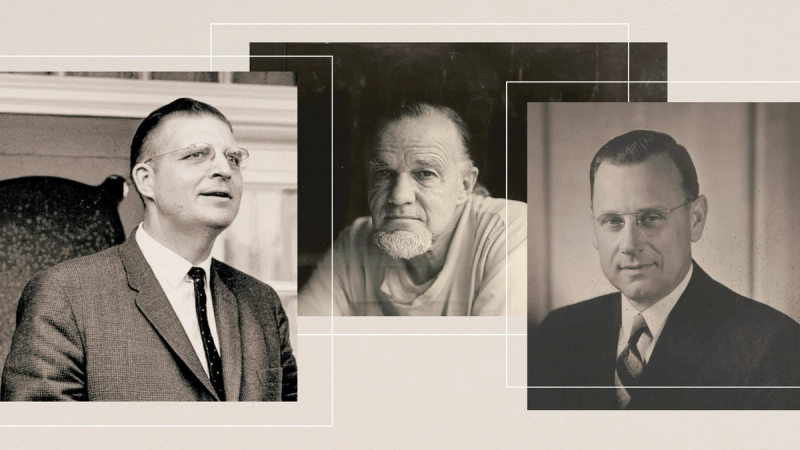
In the United States, a unique question has always accompanied the lived experience as well as the cultural shape of the Reformed tradition. In the postwar period in North America, it was not uncommon to ask whether the evangelical moniker was incidental or essential to Reformed churches. The neo-evangelical movement came of age in the 1970s, translated in that period by significant Reformed individuals. Notable were Carl F. H. Henry, Harold John Ockenga, Francis Schaeffer, and the institutions they created and influenced—Fuller Seminary, Gordon-Conwell Seminary, L’Abri Fellowship, InterVarsity Christian Fellowship, and most especially its primary popular journal Christianity Today. If you wore the Reformed badge during this period of time, you also looked in the direction of Westminster Seminary in Philadelphia and its signature journal, the Westminster Theological Journal. In different ways, but peculiar to all of these institutions and individuals, the lines distinguishing them from the larger evangelical tent were somewhat blurred. The caricature of Reformed theology in that period as narrowly concerned with election and predestination failed to account for its much richer and profound sacred theological deposit inherited from the magisterial Reformers—a deposit which pushed Reformed churches outside the narrow confines of their ecclesiastical boundaries. It was clearly a tradition which sought to produce theological leaders in the larger evangelical tent.
It should also be noted that two British theologians, John Stott and J. I. Packer, were profoundly influential on American soil and reinforced the Puritan heritage as the single most distinctive American expression of the Reformed tradition prior to the twentieth century. These British voices also served as a check on the triumphalism normally characteristic of American versions of Christianity. Stott and Packer (and C. S. Lewis in a different way) also carried with them a bigger tent under which diverse evangelical tribes came to believe they were generically reformed without being distinctively Reformed.
The Presbyterian Church in America
A paradigm example of the historical trajectory of the American experience of Reformed evangelicalism can be found in the Presbyterian Church in America (PCA). It was formed with the conviction that the mainline southern Presbyterian Church (PCUS) had become too liberal on the matter of scriptural authority. The early founders of the PCA nonetheless carried on the desire to be a national denomination that could and would speak into national issues. From the vantage point of smaller Reformed denominations, the PCA was a strange mixture of American evangelicalism and Reformed confessionalism.
Domestic Missionaries
Distinctive in its first generation was the launching of the Great Cities Campaign in the early 1980s and the national college ministry—Reformed University Fellowship. The Great Cities Campaign worked on the assumption that evangelical and Reformed churches had largely ignored ministry in the great cultural centers of American cities, and that a renewed commitment to church planting in cities would bear much new fruit as a post-Christendom missionary strategy. Over the course of 20 years, the campaign changed the perception among young pastors that urban spaces were now places not to be shunned but where frontline exciting ministry was taking place. In the early 1990s, few young seminarians thought of heading to cities to begin their ministry careers. By the second decade of the 2000s, Tim and Kathy Keller’s church planting experience with Redeemer Presbyterian Church (PCA) in Manhattan left an indelible imprint on the aspirations of many young Reformed seminarians all across the United States. Church planting up and down the coasts and across the increasingly secularized cities in the heartland exponentially increased as a result. Young church planters assumed the role of domestic missionaries, which required thinking through the cultural contexts of diverse settings in a way that saw the church planter as a cultural insider and outsider at the same time. Keller argued, along with the architects of the Great Cities Campaign, that church planting was a more effective strategy for evangelism than the strategies employed by established churches. Members of church plants were more likely to engage their unbelieving friends and neighbors, and unbelievers were more likely to “try out” new churches. It also significantly shifted the internal culture of the PCA from a traditional national and evangelical denomination to a missional and evangelistically oriented one. During the first decade of the twenty-first century, the PCA became one of the fastest growing denominations in the country.
One important difference among pastors in the denomination was how much or how little their churches identified with the larger evangelical movement. For some, confessional commitments served to draw a sharp boundary marker with evangelicalism, while for others the “missionary encounter” with contemporary secular culture meant they were part of the postwar interdenominational revival movement known as evangelicalism. The Great Cities Campaign was not the origin of significant differences among congregations, but it surely deepened those differences and gave voice to why those differences mattered as the PCA (and other Reformed denominations) wrestled with an uneasy alliance with the wider evangelical movement.
Accompanying the Great Cities Campaign, with its emphasis upon church planting in cities, was the initiation of Reformed University Fellowship (RUF) among the large and largely secular university campuses of America. From its inception, the PCA required ordained teaching elders/pastors to lead the RUF chapters on campus. The PCA affirmed the reality that RUF pastors should be recognized as having a regular and ongoing pastoral call as missionaries, not in a foreign land but in these predominantly post-Christian secular universities. This arrangement increasingly encouraged the denomination to see the importance of the missionary encounter with late modern secular culture not simply on large secular campuses but also in the ordinary settings of the local church. For some presbyteries, this was an encouragement to recognize that their local churches also occupied a missionary field.
The recognition that Reformed folk should and could think of their local cultural setting as a mission field quietly transformed the internal culture of many PCA congregations and, to a lesser extent, changed the pastoral training provided at Reformed seminaries. A key theme closely attached to this “turn to mission” was the conviction that the church should not disparage the cultural context in which it found itself. Instead, Christians could see culture’s broken parts but also see the reflections of God’s common grace and thereby communicate to its inhabitants that the church was interested in its flourishing, if also to communicate that flourishing—especially that ultimate flourishing—could only finally be fulfilled in the gospel. Those attracted to this missionary model of the contemporary pastor sometimes thought it was less important to stress the differences among diverse Christian tribes than it was to see the crucial challenges presented by living on a mission field. Doctrinally oriented folk were concerned with an apparent thinning of the confessional heritage of the Reformation. They believed confessional commitments had moved from being in the center of a church’s or pastor’s identity and appeared only on the outer ring of core concerns. In their minds, this was the means by which mission-minded churches retained lines of communication with a secular culture and with other mission-minded churches.
Contextualization
The “turn to mission” also brought the issue of contextualization to the forefront of denominational discussions—and also surfaced distinctly different theological convictions about contextualization across the various Reformed denominations. At its simplest, contextualization is the attempt to adapt the expression and the practice of biblical truth to people of a particular context, making it as understandable and compelling to them as viable without compromising that truth. “Over-contextualizing” arises when the conceptual categories of a cultural context provide the norms which govern the allowable content of the Christian faith. The other end of the spectrum might be referred to as “under-contextualization.” At this end of the spectrum, there is an irreconcilable difference and conflict between the Christian faith and the surrounding cultural norms.
When the term contextualization first came to the fore in missiological circles in the 1970s, it was intended as a cudgel against the conviction that there could be any notion of a transcultural gospel. At the time, most evangelicals deeply distrusted those within the World Council of Churches who used the term in order to change biblical doctrine to be more aligned with the thought trends of modern times. During the last two decades of the twentieth century, the Lausanne Movement under John Stott’s leadership came to affirm that there was such a notion as “faithful contextualization.” Evangelical missiologists in this period attempted to hold on to two claims at once—first, the truths of the gospel were delivered once and for all in the Scriptures; and second, these truths could and should be translated into the vernacular of different cultural settings without losing the “once and for all–ness” of the gospel.
Post-Denominationalism
The “turn to mission” has led many sociologists of religion to describe the present moment as “post-denominational,” signifying that most congregants do not align themselves with a local church because of its denominational identity. What matters most to congregants is their comfort level with the contextual vibe of the local congregation. Many churches go so far as to hide their denominational ties by naming themselves without any reference to the theological tradition they actually call home. The branding of churches by locale (e.g., Stone Creek Church) or culture (e.g., Renovation Church) has replaced the naming of churches with reference to their denominational connection (e.g., Second Baptist Church). Pastors themselves may identify with church networks rather than ecclesial denominations. These networks of churches likely have looser theological boundaries than denominations historically, and they tend to be focused on a common mission that binds their voluntary member churches together. Denominational affiliation may still exist, but many of those churches no longer carry their primary identity in denominational terms. They have a sense of belonging in a very large house called “evangelical,” but they are not really sure where their own room is in the house. They spend most of their time in the hallway, rather than entering into any specific room that might belong to a specific Protestant theological tradition. They realize they are energized by the conversations about Jesus with all the diverse parties that also reside in the house (for the most part), and they are mostly content to stay in the front hallway talking with other house members. But when it comes to entering a room distinct from others in the house, they are wary of leaving generic Christianity for anything more specific and concrete. The blessing is that they have a sense that this is their house. The curse is they don’t have a sense of belonging to anything more specific and substantive.
To many, denominationalism itself is a besetting sin of the American church, the legacy of its connection to the diverse ecclesiologies of the Protestant Reformation. Prior to the twentieth century, church divisions would have been defined in theological language—disputes over predestination or clerical authority or the sacraments. The Protestant solution to these differences was the embrace of diverse denominations. Methodists and Lutherans and Baptists and Presbyterians and Anglicans all belonged to a common Protestant tradition, but each held to their own peculiar theological distinctives. These standing differences among Protestant church bodies have come to be viewed in an age of polarization as a tragic disaster. One unfortunate solution has been to define a church’s identity along the political spectrum—right to left—conservative or liberal. These “all defining” categories are borrowed from the wider political discourse and simply lend themselves to a generic homogenization of theological categories and an increasing reliance on hot-button political and culture war issues. Many distinctively confessional Protestants seem oddly out of place on the liberal/conservative spectrum. At the turn of the twenty-first century, the bastion of political/religious conservatism, Jerry Falwell’s Moral Majority, tended not to have many Missouri Synod Lutherans, Orthodox Presbyterians, or Christian Reformed folk but appeared quite conservative theologically. That trend continues to this day, as these Reformation churches have steadfastly refused to wear the “Christian nationalism” badge, preferred by many other politically oriented evangelical churches.
Conclusion
The lone American “tradition” which has developed a peculiarly modern and democratically informed construct of ecumenism (and correspondingly a strategy of diversity) is evangelicalism. The postwar “evangelical tradition” intentionally contained renewal movements at its core, while also relating to a wide variety of denominational identities. The hope of the neo-evangelical founders (such as Carl F. H. Henry, Harold John Ockenga, and Billy Graham) was to create a movement large enough to stand as an alternative to mainline establishment Protestantism while not inventing an alternative denominational structure. The balance between a movement so large that it defied actual definition and a movement whose willingness to cross formerly impassable divides is one of the more curious tensions in these evangelical networks in a late-modern democracy. These networks are built around a common mission with a much greater emphasis upon voluntary partnership reflecting a democratically infused construct of collaboration. These networks tend to be both overlaid on denominational commitments and sometimes independent of them. The networks themselves are mostly built around a focused understanding of mission, whether it be church planting, urban mission, multi-ethnic ministry, or charismatic worship.
This “turn to mission” has often come at the cost of a deep and rich theological center by which Protestants historically conceived of their common Protestant convictions. The loss of the theological center may appear to allow for a larger evangelical tent, while in fact becoming more nebulous and less theologically grounded. The “turn to mission” need not have this outcome, but the symbiotic relationship between historic Protestant traditions and modern American evangelicalism often pushes in this direction. Theological identities need not be tribal (though they often are), and commitment to mission need not be theologically impoverished. The task ahead for Reformed churches, like the PCA committed to mission, is to work out the mysterious relationship between a robust confessional commitment and a robust and concrete “faithful contextualization.”
Footnotes
The secondary literature on the history and nature of evangelicalism is enormous. A brief listing of major works on evangelicalism would include, George Marsden, Fundamentalism and American Culture (New York: Oxford University Press, 1980), The Variety of American Evangelicalism; Edited by Donald Dayton and Robert Johnston. (Downers Grove, InterVarsity Press, 1991); Randall Balmer, Encyclopedia of Evangelicalism (Waco, TX: Baylor University Press, 2004); Robert Wuthnow, The Restructuring of American Religion: Society and Faith Since World War II (Princeton: Princeton University Press, 1988); James Davidson Hunter, American Evangelicalism: Conservative Religion and the Quandary of Modernity (New Brunswick, NJ: Rutgers University Press, 1982); Christian Smith, American Evangelicalism: Embattled and Thriving (Chicago: University of Chicago Press, 1998); Mark Noll, The Scandal of the Evangelical Mind. A helpful guide to primary sources of the movement is Evangelicalism and Fundamentalism: A Documentary Reader, Edited by Barry Hankins. (New York: New York University Press, 2008).
BackThe common stereotype of evangelicalism as a thoroughly politicized movement is actually at odds with the many confessional statements of the various denominations and networks of evangelicals, which do not contain any substantive political statements. The political captivity of large scale evangelicalism likely shows that evangelicalism is not fundamentally a confessional movement.
BackCf. Sean Lucas, For a Continuing Church: The Roots of the Presbyterian Church in America (Philipsburg, NJ, Presbyterian and Reformed Publishing, 2015).
BackAccording to the experts, most local evangelical-leaning churches still belong to a denomination. See Mark Thumma, “What God Makes Free Is Free Indeed: Nondenominational Church Identity and Its Networks of Support;” unpublished paper posted on the Hartford Institute for Religion Research website and accessed at: http://www.hartfordinstitute.org/bookshelf/thumma_article5.html.
BackThis metaphor comes from Michael Horton who in turn cites C. S. Lewis as the originator of the metaphor—with a slightly different twist. See Michael Horton, “The Church After Evangelicalism” in Richard Lints, ed. Renewing the Evangelical Mission (Grand Rapids: Eerdmans, 2013) 134–160. C. S. Lewis, Mere Christianity (New York: Harper Collins, 2001, orig. 1952) xvi.
BackCf. John Frame, Evangelical Reunion: Denominations and the One Body of Christ (Grand Rapids: Baker, 1991), Peter Liethart, The End of Protestantism: Pursuing Unity in a Fragmented Church (Grand Rapids: Brazos Press, 2016). The criticism of Protestant denominationalism is also one of the sharpest criticisms leveled at Protestants by thoughtful Roman Catholics. This oft repeated sentiment by Roman Catholics is nicely summarized by Stephen Beale, “Just How Many Protestant Denominations Are There?” in The National Catholic Register, Oct 31, 2017. Accessed at: https://www.ncregister.com/blog/sbeale/just-how-many-protestant-denominations-are-there.
BackD. G. Hart, The Lost Soul of American Protestantism argues for a “third way” to configure Protestants who do not fit on the liberal/conservative spectrum. Hart makes the intriguing suggestion that pietism is the common heritage of churches defined by the liberal/conservative framework, since pietism privileges religious experience and thus abandons the public spheres of life to a secular rationality.
BackSee Richard Lints, “Whose Evangelicalism? Which Renewal?: The Task of Renewing a Renewal Movement” in Richard Lints, ed., Renewing the Evangelical Mission (Grand Rapids: Eerdmans, 2013).
BackThe emphasis is not on a single network of churches, but rather the vast number of networks of churches, the vast majority of which have been started within the last 40 years. This would also include the large number of non-denominational churches that have started in the last 40 years and also the many networks within denominations. See Ed Stetzer and Daniel Im, Planting Missional Churches. See also Stetzer, “Defining Evangelicals in Research” on the NAE website, Winter 2017/2018. Accessed at: https://www.nae.net/defining-evangelicals-research/
BackThere are literally hundreds of these networks, most of which focus on single mission issue. For example, The Willow Creek network of churches focuses on innovative church mission. The Acts 29 network of churches focuses on church planting with a clear Reformed theological framework. The City-to-City network of churches focuses on church planting movements in large global cities. The Mosaic network of churches focuses on planting multi-ethnic and multi-racial churches.
Back