In 1638, Cyril Lucaris, Patriarch of the Orthodox Church of Constantinople, was arrested and convicted of treason by high-ranking Ottoman officials. Grimly, he died at the hands of the Janissaries, the elite infantry units that formed the Sultan’s army, who strangled him and pitched his body into the Bosporus Strait. How did he come to this end? To attempt even a partial answer to that thorny question is to plunge headlong into a time and a place that might well comprise the stuff of an Orhan Pamuk novel, filled with international intrigue. Yet one major component of the story is Lucaris’s relation to the Bible.
Born in Crete, Lucaris studied in Padua and Venice. His entire subsequent career—first in Poland-Lithuania, in the 1590s, as an envoy of the then patriarch of Alexandria, his uncle, to an embattled Orthodox community in Eastern Europe; then in Egypt, from 1601, where he himself was elevated to the patriarchate of Alexandria; then in Constantinople, from 1620, as the “Ecumenical Patriarch”—was marked by nothing if not convolutions, as virtually all scholars recognize. At each stop, he confronted Roman Catholic “intruders” into Greek Orthodox affairs. In Poland-Lithuania, he opposed the arrangement by which Orthodox bishops accepted papal authority as part of the Union of Brest in 1596. Across the Eastern Mediterranean, he clashed with Jesuit missionaries. In response, he reached out to Protestants. He grew close to Cornelius Haga, the Dutch Republic’s first diplomatic representative to Istanbul. Through Haga, he began to correspond with various Dutch Calvinist ministers. He also discussed Christianity with the archbishop of Canterbury and gifted the priceless Codex Alexandrinus, one of the earliest and most complete manuscripts of the Bible, to England in gratitude for support in his struggle to retain the patriarchate against his numerous enemies. Rival factions paid massive sums in bribes to Ottoman rulers to have specific bishops installed, removed from, or restored to office, including Lucaris.
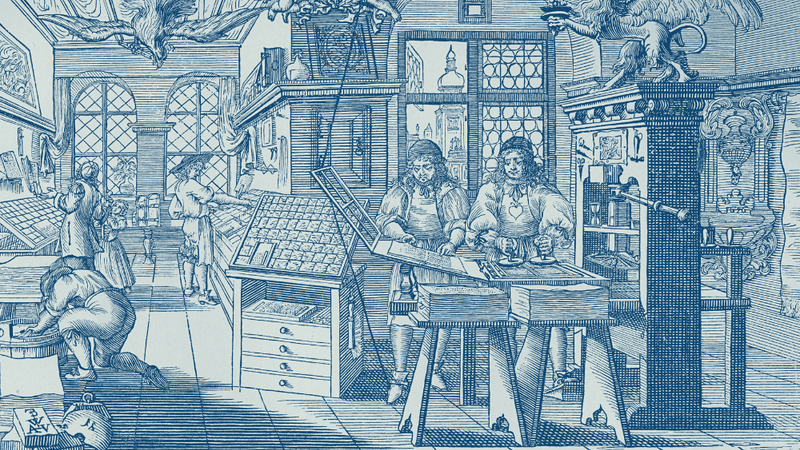
Amid such tumult, Lucaris helped establish the first, albeit short-lived, Greek printing press in the East. One of the texts that issued from it was a vernacular Greek statement of the Orthodox faith. Lucaris also wrote his own personal Confession of Faith, in both Latin and Greek, in which he clearly affirmed the supreme authority of Scripture for faith and life, justification by faith alone, and predestination. Financed by the Dutch and printed in Geneva—the Greek press in Constantinople having been dismantled by Ottoman authorities, reportedly at the urging of Jesuit and French Catholic agitators—the Confession is responsible for Lucaris’s sobriquet of the “Protestant Patriarch.” While the full extent of Lucaris’s desire to see the Reformed tradition embraced among the Orthodox may be debated, he did encourage the Dutch to send two hundred copies of the Belgic Confession and Heidelberg Catechism, which had been translated into Greek and printed under the title Ecclesiarum Belgicarum Confessio, now bound with select canons from the Synod of Dort, and made special efforts to distribute them in Constantinople.
Yet most striking is Lucaris’s involvement in the modern Greek Bible. Studying this endeavor is not for the faint-hearted, for it is entangled in a web of complexities, material and logistical as much as theological and political, and its fate corresponds with Lucaris’s own. Specialists have long discussed different aspects of the work. The fullest account of it can be found in a recent pioneering article, backed by extensive archival research, by Richard Calis, who vividly pointed out how Lucaris—and alongside Lucaris, what we might call the “Bosporus Bible”—uniquely demonstrates the manner in which “the [European] Reformations touched the Greek Orthodox world but also failed to root there.” Let me follow his reconstruction here.
The project relied on both homegrown Greek and foreign Dutch and Genevan cooperation. In the 1630s, Lucaris commissioned Maximus of Gallipoli, a learned Greek monk ordained as an Orthodox priest, to produce the first-ever translation of the New Testament into the Greek vernacular. Maximus worked alongside Antoine Léger, a Piedmontese minister sent from Geneva to serve as chaplain to Haga, the Dutch ambassador. Léger—and perhaps some others—assisted with the translation labor—the business of rendering ancient, first-century Greek into intentionally simple, seventeenth-century Greek proved more challenging than one might initially think—while Lucaris helped proofread and revise the text. For their model, they adopted the Italian translation made in 1607 by Giovanni Diodati, the Swiss-Italian theologian and linguist. “You have done well,” Lucaris told Léger, “to collate the original texts with the vernacular. I see that Father Maximus has been very diligent in his translation. The text of Mr Diodati has been followed. Doubt about certain words matters little, while all [words] correspond to their meaning.” Yet Lucaris did challenge Maximus’s choice for the right Greek word for “bread,” as Calis discerned, suggesting the more common psomi, rather than artos, and explaining his rationale in great detail.
Spiritual and literary hopes ran high for the edition. Although the Dutch agreed to finance it and the Genevans to print it, the project never really enjoyed a stable footing. Spiraling production costs and mishaps undid the work: the printer’s copy was lost and, once recovered, nearly unusable; multiple scholars charged with revising or proofreading the text died mid-task, including the translator Maximus. By the time the translation did reach print in 1638, in a run of 1,500 copies, Lucaris had also died: following an accusation by Jesuits in Constantinople, who alleged that he was planning a rebellion against the Islamic regime, Ottoman authorities had him executed. The distribution of the New Testament similarly collapsed. Copies intended for Constantinople, via Marseille, either stalled in transit or never left Geneva. Most of them accumulated dust in storage. As Calis observed, they were seized as collateral for rent in arrears. More than that, Calis noted, some three decades later, the famed Genevan theologian Francis Turretin reported to the Dutch directors of Levantine trade that 1,130 copies of the “Bosporus Bible” were still lying unused in Geneva. Still later, Turretin’s son, Jean-Alphonse, reminded the government about the books. Not until the 1730s—some hundred years after the project began—did the New Testament volumes travel eastward.
In the end, what makes Lucaris most luminous is his consistent championing of the Bible in terms evocative of Protestants—from Luther and eventually, though after Lucaris’s time, to the Westminster Divines. In the appendix to his Confession, Lucaris said that the Holy Spirit worked through the word to dispel darkness. No one, therefore, should prevent any person from reading the Bible and finding in it the doctrines of the Christian faith. In his preface to the 1638 New Testament, he stressed that readers should be able to access the text directly, not only through elite clerics, as in traditional Orthodox practice. All Christians, and all of his people, Lucaris insisted, should be able to read Scripture in their own language. The goal was as admirable as it was dangerous, for it pitted him against many of his Orthodox peers and certainly shortened his life, just as many Reformers met persecution when they embraced sola scriptura. Cyril Kontaris, Lucaris’s successor as patriarch of Constantinople, swung toward Rome. Within months of Lucaris’s death, Kontaris convoked a synod to anathematize Lucaris and his publications. Finally, in 1672, the Orthodox Synod of Jerusalem condemned the New Testament in vernacular Greek. So far, the “Bible on the Bosporus.” One wonders what might have been.
Editorial Note: This essay is a revised and updated version of the original published in the Sep/Oct 2024 print issue of Modern Reformation. For citations, this revised version is the correct one to reference.
Footnotes
Steven Runciman, The Great Church in Captivity (Cambridge: Cambridge University Press, 1968), 285–86.
BackLucaris’s biography is most accessible in Runciman, The Great Church in Captivity, 259–88; and George A. Hadjiantoniou, Protestant Patriarch: The Life of Cyril Lucaris (1572–1683) (Richmond, VA: John Knox Press, 1961).
BackFor rich and wide-ranging accounts, see Ovidiu Olar, La boutique de Théophile: les relations du patriarche de Constantinople Kyrillos Loukaris (1570–1638) avec la réforme (Paris: EHESS; Centre d’études byzantines, néo-helléniques et sud-est européennes, 2019); and Gunnar Hering, Ökumenisches Patriarchat und europäische Politik 1620–1638 (Wiesbaden: Franz Steiner Verlag, 1968).
BackScott Mandelbrote, “English Scholarship and the Greek Text of the Old Testament, 1620–1720: The Impact of Codex Alexandrinus,” in Scripture and Scholarship in Early Modern England, ed. Ariel Hessavon and Nicholas Keene (London: Routledge, 2006), 74–93, especially 77–80.
BackFor an accounting of bribes, see Dénes Harai, “Une Chaire aux enchères. Ambassadeurs catholiques et protestants à la conquête du patriarcat grec de Constantinople, 1620–1638,” Revue d’histoire moderne et contemporaine 58, no. 2 (2011): 49–71, especially 70.
BackEvro Layton, “Nikodemos Metaxas, the First Greek Printer in the Eastern World,” Harvard Library Bulletin 15, no. 2 (1967): 140–68.
BackFor one convenient, if non-technical, English-language translation of Lucaris’s Confession, see Hadjiantoniou, Protestant Patriarch, 141–45.
BackThis understanding is the clear position of Hadjiantoniou, Protestant Patriarch and, to some extent, of Runciman, The Great Church in Captivity.
BackVasileios Tsakiris, “The ‘Ecclesiarum Belgicarum Confessio’ and the Attempted ‘Calvinisation’ of the Orthodox Church under Patriarch Cyril Loukaris,” Journal of Ecclesiastical History 63, no. 3 (2012): 475–87.
BackRichard Calis, “The Impossible Reformation: Protestant Europe and the Greek Orthodox Church,” Past & Present 259, no. 1 (May 2023): 43–76, at 50.
BackCalis, “The Impossible Reformation,” 64–65. In addition, see Ovidiu Olar, “‘Un trésor enfoui’: Kyrillos Loukaris et le Nouveau Testament en grec publié à Genève en 1638 à travers les lettres d’Antoine Léger,” Cahiers du Monde Russe 58, no. 3 (2017): 341–70.
BackÉmile Legrand, Bibliographie hellénique, vol. 4 (Paris: Leroux, 1896), 476, quoted in Calis, “The Impossible Reformation,” 65.
BackCalis, “The Impossible Reformation,” 65.
BackCalis, “The Impossible Reformation,” 66–68. Correspondence related to the production and distribution of the work is reproduced in Christiaan Sepp, “Het Nieuw-Grieksche Testament van 1638,” Bibliografische mededeelingen (Leiden: E. J. Brill, 1883), 187–256.
BackSee Η Καινή Διαθήκη του Κυρίου ἡμών Ιησού Χριστού: Δίγλωττος, ̓Εν ἧ ἀντιπροσώπως τό τε θείον πρωτότυπον καὶ ἡ ἀπαραλλάκτως ἐξ ἐκείνου εἰς ἁπλὴν διάλεκτον, διά τοῦ μακαρίτου κυρίου Μαξίμου του Καλλιουπολίτου γενομένη μετάφρασις ἅμα ἐτυπώθησαν (Geneva, 1638), **3v–***2v.
BackAnthony J. Khokar, “The ‘Calvinist Patriarch’ Cyril Lucaris and His Bible Translations,” Scriptura 114 (2015): 1–15; George P. Michaelides, “The Greek Orthodox Position on the Confession of Cyril Lucaris,” Church History 12, no. 2 (1943): 118–29.
Back