In The Case for Christian Nationalism, widely considered the strongest argument for this position, Stephen Wolfe contends that the “classical Protestant position is that the civil magistrate can punish external religion—e.g., heretical teaching, false rites, blasphemy, and Sabbath-breaking—because such actions can cause public harm, both harm to the soul and harm to the body politic.” Late eighteenth-century Virginia Presbyterians would have vigorously disagreed. In fact, they championed disestablishment and religious liberty because they feared the opposite—that a civil magistrate enforcing religious conformity caused harm to individuals’ souls, the church, and the body politic.
A brief review of key memorials, or petitions, that Virginia’s Presbyterians, led by the Hanover Presbytery, sent to the General Assembly between 1776—when the Virginia Convention passed the Declaration of Rights—and 1786—when it adopted Thomas Jefferson’s statute for establishing religious freedom—illustrates this point. Virginian Presbyterians gradually became enthusiastic defenders of liberty of conscience, advocated the complete separation of church and state, and resisted all state efforts to provide the Church of England with any special emoluments or benefits. The last thing they wanted to see was the civil magistrate punishing those who dared to disagree with the Anglican establishment.
The Anglican Establishment
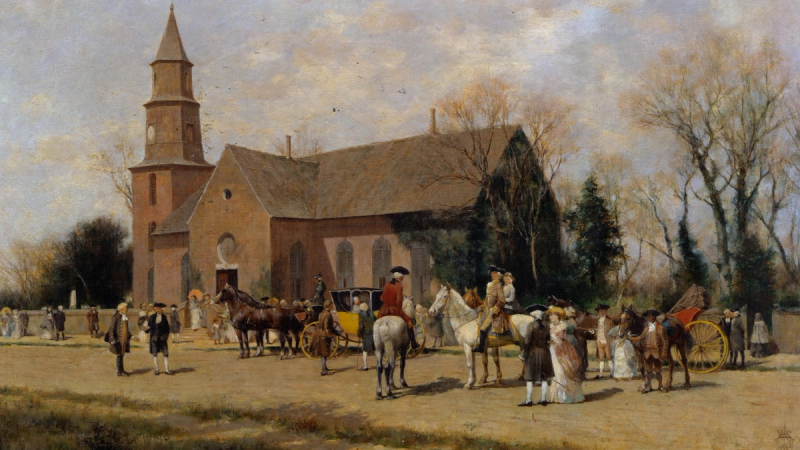
A review of how the Church of England functioned as the established church in Virginia helps contextualize Presbyterian efforts to secure liberty of conscience. The Virginia colony possessed an established church and other features Wolfe admires. Virginia’s 1619 “Great Charter” made the Church of England the exclusive state-sanctioned religion of the colony. Laws required all plantations to set aside a place for worship and punished colonists who skipped weekly worship services. While Puritans were protesting the policies of King Charles I in England, the Virginia legislature made it unambiguously clear that dissent would not be tolerated. In 1642–1643, the legislature passed an act empowering the governor to compel all nonconformists “to depart the colony with all conveniencie.” In the eighteenth century, the Church of England’s role in the life of the colony was even more pervasive as counties collected taxes to finance Anglican priests’ salaries.
The Growth of Dissent
Cracks began to appear, however, in the Church of England’s monopoly with passage of the Act of Toleration in 1689. In England, the Act granted “toleration,” not complete religious freedom, to Presbyterians and other dissenting Protestant groups, but not to Roman Catholics. The law permitted dissenters to gather for worship, but they still had to pay taxes to support the Church of England and take oaths of allegiance to the crown.
The First Great Awakening, which swept across the American colonies between the 1720s and 1740s, exerted new pressures upon the Anglican establishment in Virginia. The evangelical revival brought thousands of people into Presbyterian and Baptist churches, which Anglicans resented. Prompted by Anglican clergy, the Virginia legislature passed laws requiring dissenting ministers to secure licenses to preach from county authorities and to restrict their work to particular parishes. Many Baptist ministers refused to comply and were sometimes beaten and placed in stocks as a result. By 1776, Virginia authorities had imprisoned at least thirty-four Baptist ministers.
Presbyterians initially accepted these burdensome provisions. For example, when the General Court proposed modifications to the Act of Toleration in Virginia in 1772–1773, the Hanover Presbytery agreed to register its churches as places of worship and to require its ministers to take oaths of allegiance.
Presbyterians were slow to support disestablishment for one reason: their theological standard, the Westminster Confession of Faith, sanctioned an established church. The Confession venerated liberty of conscience but with certain qualifications. Christian liberty, the Confession explained, could not be used to “oppose any lawful power … whether it be civil or ecclesiastical.” Anyone who invoked Christian liberty to propagate “erroneous opinions or practices” could be punished by “the censures of the Church, and by the power of civil magistrate.” The Confession asserted that civil magistrates had the duty to preserve “unity and peace” in the church, suppress “all blasphemies and heresies,” prevent “all corruptions and abuses in worship and discipline,” ensure the proper observation of “all the ordinances of God,” and call church synods when necessary—all elements of the magisterial Protestant tradition that Wolfe favors. Scottish immigrants hailed from a nation where Presbyterianism was the state church, but the British monarch was the church’s “supreme governor.” When Presbyterians found themselves in an entirely new context where they were the dissenters from the established church, they came slowly to embrace the value of the liberty of conscience. The Revolutionary War created new circumstances in which Presbyterians saw an opportunity to secure it.
The Declaration of Rights
When delegates met in Williamsburg in May 1776 to declare the colony’s independence from England and to form an independent state government, they articulated their rationale in the Declaration of Rights. Since the Anglican-dominated convention could not afford to alienate members of dissenting churches because it needed them to fight the British, delegates debated several proposals regarding religious freedom. James Madison advocated for a policy of complete religious liberty and the disestablishment of the Anglican church, but delegates rebuffed his efforts. Delegates, however, conceded greater liberty to dissenters. In its final form, the Declaration asserted: “That religion, or the duty which we owe to our Creator, and the manner of discharging it, can be directed only by reason and conviction, not by force or violence; and therefore all men are equally entitled to the free exercise of religion.” Madison’s views on complete religious liberty did come to fruition in the First Amendment to the U.S. Constitution.
In a memorial to the state legislature in the fall of 1776, Virginia’s Anglican establishment opposed the Declaration of Rights. An established church, the memorial observed, was “conducive” to the state’s “peace and happiness.” Anglicans insisted that “the doctrines of Christianity have a greater tendency to produce virtue amongst men than any human laws or institutions, and that these can be best taught and preserved in their purity in an established church.” For more than 150 years, they insisted, the established church had preserved the “internal tranquility, true piety, and virtue” essential to a civic happiness. Any efforts to weaken the established church threatened “destruction to the Commonwealth.” In short, Anglicans defended the magisterial Protestant position on the same grounds that Wolfe invokes.
The Anglican argument for preserving the established church, as well as Wolfe’s rationale, can be reduced to a simple Aristotelian syllogism:
- A republican form of government needs virtuous citizens.
- Christianity produces virtuous citizens.
- Therefore, the state should preserve the established church because it helped produce virtuous citizens.
In the Revolutionary Era, few questioned either the major or minor premises in this syllogism. But Presbyterians (like members of many other dissenting religious traditions) gradually came to reject the syllogism’s conclusion. Presbyterians embraced a new position: religious liberty provided the most efficacious means for nurturing a virtuous citizenry.
When Virginia’s House of Delegates reconvened in the fall of 1776, petitions demanding complete religious freedom greeted them. Baptists submitted one with some 10,000 signatures endorsing the Declaration of Rights. Virginia Presbyterians joined the growing chorus by sending a memorial to the legislature describing the Declaration as “the Magna Charta of our commonwealth.” Presbyterians complained about the “several ecclesiastical burdens, and restrictions” that the state imposed upon dissenting denominations. Presbyterians applauded the passage of the Declaration of Rights because it secured for “us the free exercise of religion according to the dictates of our consciences.”
Establishment Harms the Souls of Individuals
Virginia Presbyterians came to view an established church as a threat to the souls of individuals. In their final memorial (1785), they insisted, “We are fully persuaded of the happy influence of Christianity upon the morals of men; but we have never known it, in the history of its progress, so effectual for this purpose, as when left to its native excellence and evidence to recommend it, under the all directing providence of God, and free from the intrusive hand of the civil magistrate.” To Presbyterians, the intrinsic veracity of Christianity, as well as divine providence, would impress upon individuals the truthfulness of the gospel and, in turn, prompt them to act morally. Consequently, the “intrusive hand” of the Anglican establishment was unnecessary. Echoing the Declaration of Rights, the 1776 Presbyterian memorial asserted “that the duty which we owe our Creator, and the manner of discharging it, can only be directed by reason and conviction.” Presbyterians insisted that individuals must embrace the Christian faith without mental reservation. Any external inducement or fear of punishment was a form of coercion that violated people’s liberty of conscience. Virginia Presbyterians had apparently embraced a more Enlightenment-inspired appreciation of the importance of reason and the sanctity of the conscience in a way that departed from the classical Protestant position Presbyterians in Scotland had espoused and Wolfe commends.
After the Treaty of Paris in 1783, the Protestant Episcopal Church (the new name adopted by the Church of England in the now independent states) renewed its efforts to secure state aid. But instead of reviving a tax to fund the Anglican establishment exclusively, they proposed a general assessment which would have distributed tax dollars to various Protestant churches according to the preference of each contributor, and any funds not designated would go to public education. Presbyterians also opposed this as a threat to individuals’ souls.
A general assessment, Presbyterians argued in 1785, “unjustly subjects men who may be good citizens, but who have not embraced our common faith, to the hardship of supporting a system, they have not yet believed the truth of.” Liberty of conscience applied not only to Christians but also to non-Christians. Presbyterians added that the general assessment was morally wrong because it deprived non-Christians “of their property” by taking their tax dollars to finance a church in which they do not believe. In short, Presbyterians wanted everyone—believers and unbelievers alike—to enjoy complete liberty, including the freedom to support (or not support) financially a denomination of their preference.
An Establishment Harms the Church
Virginia Presbyterians not only deemed a magistrate-enforced religion a threat to individuals’ souls but also an impediment to the mission of the church. In keeping with the Westminster Confession, Presbyterians insisted that the church and state had different ends. As they explained in their 1776 memorial,
[W]hen our blessed Savior declares his kingdom is not of this world, he renounces all dependence upon state power, and as his weapons are spiritual, and were only designed to have influence on the judgment, and heart of man, we are persuaded that if mankind were left in the quiet possession of their unalienable rights and privileges, Christianity, as in the days of the Apostles; would continue to prevail and flourish in the greatest purity, by its own native excellence, and under the all disposing providence of God.
In a second memorial sent to the General Assembly in 1777, Presbyterians noted that “the kingdom of Christ, and the concerns of religion, are beyond the limits of civil control, we should act a dishonest, inconsistent part, were we to receive any emoluments from human establishments for the support of the gospel.” In a dramatic departure from the magisterial position of their Scottish ancestors (and future admirers like Wolfe), Presbyterians now considered it unbiblical to accept assistance from the state to do the work of the church. For this reason, they called upon the state in their May 1784 memorial to permanently secure “the unalienable rights of conscience” in the state’s constitution.
When Anglicans proposed a general assessment in 1783 to appease dissenting Protestant denominations, Presbyterians rejected it because it would still preserve the authority of state over churches and ministers. The “maxims have long been approved, that every servant is to obey his master; and that, the hireling is accountable for his conduct to him from whom he receives his wages,” the 1777 memorial asserted. In the end, Presbyterians viewed the proposed general assessment as simply another way to “revive the old establishment in its former extent.”
Alongside their understanding of the spiritual nature of the church, Presbyterians embraced what had become the dominant republican view of the state: “We would humbly represent, that the only proper objects of civil government, are the happiness and protection of men in the present state of existence; the security of life, liberty, and property of citizens; and to restrain the vicious and encourage the virtuous by wholesome laws, equally extending to every individual.” The coercive power of a state-church, as the classical Protestant position commended by Wolfe, endangered the church’s ability to persuade people to worship God and obey divine law “by reason and conviction.” In their 1776 memorial, they wrote, “[W]e ask no ecclesiastical establishments for ourselves; neither can we approve of them when granted to others.” Presbyterians, in short, advocated the separation of the institutions of religion and government.
Establishment Harms the Body Politic
Virginia Presbyterians also viewed the magistrate-enforced religious establishment as a threat to the peace and civility of the body politic. Anglicans were the insiders who enjoyed the largess of establishment, while dissenters were outsiders who resented having to fund a church with which they disagreed theologically. To Presbyterians, both the Anglican establishment and the proposed general assessment created divisive religious divisions that jeopardized social unity. In its October 1785 memorial, Presbyterians listed numerous dangerous consequences the measure would provoke if passed. They feared that it would “produce jealous animosities, and unnecessary contentions among different parties.” Because the proposal “disgusts so large a proportion of citizens,” Presbyterians warned, “it would weaken the influence of government in other respects, and diffuse a spirit of opposition to the rightful exercise of constitutional authority, if enacted into a law.” Contrary to Wolfe, Virginia Presbyterians viewed magistrate-enforced religious conformity a dangerous threat to the body politic.
Thomas Jefferson’s Statute of Virginia for Religious Freedom
Following the defeat of the general assessment, James Madison, then a member of Virginia’s House of Delegates, introduced more than a hundred bills in the fall of 1785. Among them was Thomas Jefferson’s Statute for Religious Freedom. A decade earlier, Jefferson had attempted to expand religious liberties. In his original preamble, Jefferson wrote that “Almighty God hath created the mind free” and that “all attempts to influence by temporal punishments, or burthens, or by civil incapacitations, tend only to beget habits of hypocrisy and meanness, and are a departure from the plan of the holy author of our religion.” Jefferson also deemed it “sinful and tyrannical” to coerce a person to fund a faith “which he disbelieves.” In the end, Jefferson concluded, “the opinions of men are not the object of civil government.” The statute called for disestablishment of the Anglican church and complete religious liberty for individuals. In 1779, however, the House of Delegates tabled the measure.
After the demise of the general assessment bill, Madison and dissenting churches seized the opportunity to reintroduce the Statute for Religious Freedom. In their August 1785 memorial, Presbyterians repeated its complaint that the state’s constitution still did not fully protect people’s freedom of conscience. The only remedy to this “defect” was for the legislature to adopt “the bill in the revised laws establishing religious freedom.”
Revisions to the Westminster Confession
In 1788, American Presbyterians revised their doctrinal standards to conform to their newfound theological convictions. In the “Preliminary Principles” to the Form of Government, Presbyterians insisted that “the right of private judgement” was “universal and unalienable.” Moreover, Presbyterians asserted that “they do not even wish to see any religious constitution aided by civil power, further than may be necessary for protection and security, and, at the same time, be equal and common to all others.”
The revised Westminster Confession preserved the exact language regarding the liberty of conscience but moved away from the Reformational Protestant position by dropping the power of civil magistrates to censor erroneous opinions or heresies. Likewise, the Confession maintained the distinction between the power of the church and the state but dropped the authority of the state to safeguard the peace of the church and to call assemblies. The Confession explicitly stated that “no law of any commonwealth should interfere with, let, or hinder” the church. It did affirm that it is the duty of the state “to protect the Church of our common Lord, without giving the preference to any denomination of Christians above the rest.” The revision also asserted that it is the duty of the state “to protect the person and good name of all their people, in such an effectual manner as that no person be suffered, either upon pretense of religion or infidelity, to offer any indignity, violence, abuse, or injury to any person whatsoever.”
To be sure, Wolfe’s proposal does not explicitly advocate coercing conversions by either the church and/or the state. In a 2026 essay, Wolfe claimed that the principle “civil government promoting true religion” does not necessarily entail a “coerced faith.” This brief historical exploration of Virginia Presbyterians’ efforts to secure religious freedom raises two pertinent questions for eighteenth-century Anglicans and contemporary Christian nationalists like Wolfe. Does a state-recognized religion really honor liberty of conscience? Virginia Presbyterians came to believe that the Holy Spirit convinced and converted people. People had to come to true faith without fear of punishment or inducements of benefit. As they argued in their 1776 memorial, individuals should be free to support or not support any denomination according to their “own private choice.” The Gospel record of Jesus Christ’s ministry (and one could add those of Paul and Peter in the book of Acts) inspired Virginia Presbyterians more than a nostalgia for the lost days of a bygone era when Presbyterians in Scotland enjoyed the privilege of establishment.
And why fear disestablishment? Presbyterians repeatedly pointed to the model of Jesus Christ’s earthly ministry as an example to follow. Since he did not invoke the power of the civil magistrate to coerce religious faith, the church did not need the state to achieve its work. They did not fear disestablishment because it would create a free market for religion. Every religious communion, they believed, would “be left to stand or fall according to merit, which can never be the case, so long as any one denomination is established in preference to others.” Virginia Presbyterians expressed unbridled confidence in the gospel and the work of the Holy Spirit. The growth of the church during the First Great Awakening convinced Presbyterians that their message would attract sufficient followers without state aid. Even today, the absence of a religious establishment results in higher church attendance and commitment in the United States than in Europe which still maintains the formality of established churches. In short, Virginia Presbyterians believed that the republic would flourish because a free church preached a pure gospel that changed people’s lives and empowered Christian citizens to pursue virtue and serve the common good.
To Virginia’s Presbyterians, the Anglicans’ warrant for the establishment of a state church was the same as the rationale Muslims could use to justify a Caliphate. As they put it in their 1776 memorial, “there is no argument in favour of establishing the Christian religion, but what may be pleaded with equal propriety, for establishing the tenets of Mahomed [sic] by those who believe the Alcoran.” Although advocates of the Anglican establishment probably resented being equated to an Islamic caliphate, Presbyterians considered magistrate-enforced religious faith the real threat to individual souls, the church, and the body politic. Eighteenth-century Viriginia Presbyterians would likely say the same about today’s Christian nationalists.
Footnotes
Stephen Wolfe, The Case for Christian Nationalism (Moscow: Canon Press, 2022), 34–35.
BackWilliam Waller Hening, ed., The Statues at Large: Being a Collection of the Laws of Virginia, from the First Session of the Legislature, in the year 1619 (New York: Bartow, 1823), 122–23, 277; ); John Ragosta, Wellspring of Liberty: How Virginia’s Religious Dissenters Helped Win the American Revolution and Secured Religious Liberty (New York: Oxford University Press, 2010), 37, 110, 17.
BackThe Act of Toleration (1689), accessed August 16, 2025, https://www.encyclopediavirginia.org/_An_Act_for_Exempting_their_Majestyes_Protestant_Subjects_dissenting_from_the_Church_of_England_from_the_Penalties_of_certaine_Lawes_1688.
BackRhys Isaac, The Transformation of Virginia (Chapel Hill: University of North Carolina Press, 1982), 149–51; Thomas Kidd, God of Liberty: A Religious History of the American Revolution (New York: Basic Books, 2010), 45, 51–53; Ragosta, Wellspring of Liberty, 5.
BackErnest Trice Thompson, Presbyterians in the South (Richmond: John Knox Press, 1963), 1:98.
BackWestminster Confession of Faith, in The Creeds of Christendom with a History and Critical Notes (1931; reprint, Grand Rapids: Baker Book House, 1983) 3:644–45 (chapter 20), 653 (chapter 23).
BackRagosta, Wellspring of Liberty, 43–44; The Virginia Declaration of Rights, accessed August 15, 2025, The Virginia Declaration of Rights | National Archives; Isaac, Transformation of Virginia, 279–80; Carl Esbeck, “Disestablishment in Virginia, 1776–1802,” in Disestablishment and Religious Dissent: Church-State Relations in the New American States, 1776–1833, ed. Carl Esbeck and Jonathan Den Hartog (Columbia: University of Missouri Press, 2019), 140–43.
BackMiscellaneous Petition, Clergy of the Established Church, defending the establishment, 8 November 1776, in Religious Petitions, 1774–1802, Presented to the General Assembly of Virginia, Virginia State Library, Richmond (microfilm).
BackRagosta, Wellspring of Liberty, 140.
BackMiscellaneous Petition, Presbytery of Hanover, for Disestablishment, 24 October 1776, in Religious Petitions, 1774–1802, Presented to the General Assembly of Virginia, Virginia State Library, Richmond (microfilm); hereafter all Presbyterian Memorials will be cited by month and date.
BackPresbyterian Memorial November 1785; Presbyterian Memorial October 1776.
BackPresbyterian Memorial June 1777; Presbyterian Memorial November 1785.
BackPresbyterian Memorial October 1776; Presbyterian Memorial June 1777.
BackPresbyterian Memorial May 1784.
BackPresbyterian Memorial June 1777.
BackPresbyterian Memorial October 1776.
BackPresbyterian Memorial November 1785.
BackBill for Establishing Religious Freedom, 18 June 1779, accessed August 15, 2025, https://founders.archives.gov/documents/Jefferson/01-02-02-0132-0004-0082 ; Ragosta, Wellspring of Liberty, 66–68.
BackPresbyterian Memorial November 1785.
BackPresbyterian Church in the United States of America, The Constitution of the Presbyterian Church in the United States of America, containing the Confession of Faith, the Catechisms, and the Government and Discipline, and the Directory for the Worship of God, Ratified and Adopted by the Synod of New-York and Philadelphia, Held at Philadelphia May 16th 1788, and Continued by Adjournments until the 28th of the Same Month (Philadelphia: Bradford, 1789), cxxxiii–cxxxiv; Westminster Confession of Faith, in Creeds of Christendom, 3:645 (ch. 20), 653–54 (ch. 23).
BackZachary Garris, Sean McGowan, and Stephen Wolfe, “Report on Reformed Christian Politics,” 2026, pg. 2.
Back