
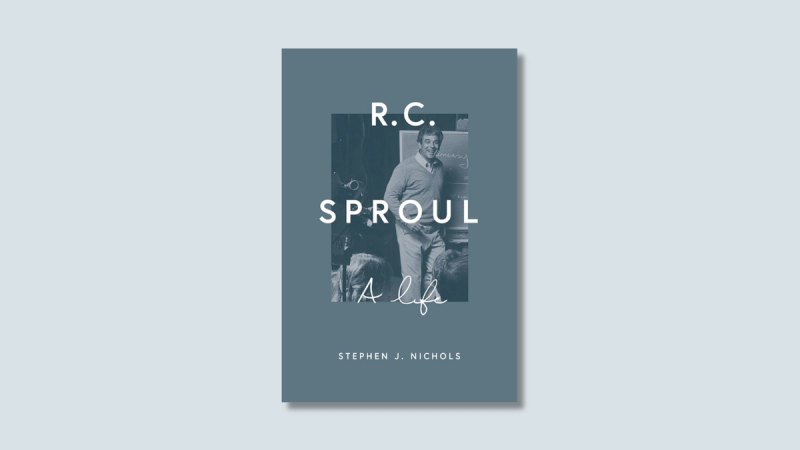
R. C. Sproul: A Life
By Stephen J. Nichols
Crossway | 2021 | 400 pages (hardcover) | $34.99
I heard R. C. Sproul speak, once, at my seminary graduation. He spoke of the absurdity of Roman Catholic relic-seeking, including one notable quest for “Joseph’s pants.”
Yes, ladies and gentlemen, Joseph’s pants.
Sproul seemed equally amused and impassioned about such religiously garbed trivialism. There is no substitute for the gospel. I still remember him spitting out “Joseph’s. Pants.”
Perhaps this is why we have a biographical work, R. C. Sproul: A Life, by Stephen Nichols, only a few years after this beloved theologian’s death. His faithfulness, plus his passion, along with a dash of idiosyncrasies—made this man ironically iconic in his own time.
This biography is warm and friendly toward its object, as you’d expect of an author who was a longtime friend and colleague of Sproul, but it is not hagiographic. The difference here is slight but significant. There is no fawning over Sproul, nor are there excess adjectives or anything in the way of hyperbole. Nichols lets a faithful, Christ-nurtured life speak for itself.
It might not be fair to call this book exclusively biographical. While it starts in typical biographical fashion—Sproul’s lineage and upbringing in Pittsburgh—it is also an overview of his theology, with chapters like “Inerrancy,” “Apologetics,” and “Holiness.” For readers who came of age with Sproul in the latter part of the twentieth century, these topics will likely provoke a wave of nostalgia.
I was not familiar with Sproul until my college years at the turn of the century, but I have a debt of gratitude for his ministry. At my Christian college, those of us who believed in biblical inerrancy were constantly waylaid by professorial condescension and besieged by plausible-sounding fallacies. In that season, I learned about the Chicago Statement on Biblical Inerrancy, and it was a bulwark for me and many others. It was only in reading this book that I learned how vitally important Sproul was to that statement and the movement behind it.
Perhaps it is my postmodern penchant for stories, but my favorite parts of the book are those that are more strictly biographical. The recounting of the death of Sproul’s father is profoundly moving. The image of him trying to master the Dutch language while studying exclusively in Dutch is captivating. Life at the original Ligonier property in the Ligonier Valley of Pennsylvania seems quaint and charming. And one of the few strands to work its way through the entire book—his marriage to Vesta—is rightly foregrounded and adds an element of grace throughout.
All of these elements—biographical and theological—paint a picture of a man who constructively engaged the theological milieu of his day and age as well as anyone. And this is why Sproul, like Luther, Machen, Schaeffer, and many others are especially relevant for our time. The battleground may have shifted, but we still can learn from those who enjoined the battle before us.
From this high point, we might find one key area of improvement for this noble work. One key battleground for Sproul—the Battle for the Bible—has notably shifted away from biblical authority to biblical relevancy—from “Is it true?” to “Is it meaningful?” Meanwhile, the topic of holiness is as stable and consistent as it is presented in Scripture. But what about apologetics?
Regardless of who holds the high ground in the classical versus presuppositional apologetics, the whole frame of thinking seems foreign to our present culture. Understanding logical syllogisms is difficult even for theologically attuned Christians, let alone for a culture that shamelessly holds to a host of contradictory and irrational beliefs. To declare “Christianity is rational” means virtually nothing in the present age, much like marriage counseling for the polygamist.
This book gives us a venerable figure to emulate, as he sought to expound the truths of God’s word in his age. Readers of every stripe would profit from this work and from the example of Sproul as he was carried by God’s grace.
But it leaves us with the question of the hour: The battle is already joined anew—how do we reason with irrationalism to the glory of God?