
How can we follow Jesus’ and Paul’s examples of “answering each person” with wisdom and grace? What might it look like to become more fluent in speaking the gospel into peoples’ lives? Let’s consider five key gospel metaphors and how we can use them in evangelism.
Five Gospel Metaphors
Gospel metaphors stretch across the breadth of the Bible and communicate God’s saving grace. The Old Testament contains many redemptive metaphors, including inheritance, exodus, the multilayered metaphor of atonement, divine blessing, a new heart, and the new covenant. These various redemptive themes coalesce in the New Testament epistles into five central gospel metaphors: justification, redemption, adoption, new creation, and union with Christ. They are not metaphors in the sense that they stand for something else or that they are symbolic of some deeper reality. Rather, each gospel metaphor represents a very real grace. Together, they form facets of the “gospel of grace” diamond.
Justification
This is a legal metaphor that resolves the dilemma of how the righteous God can relate to unrighteous people and still remain righteous. The solution to this dilemma is found in the person and work of Jesus Christ: “Yet we know that a person is not justified by works of the law but through faith in Jesus Christ” (Galatians 2:16).
The good news of justification is that while our works are sorely inadequate, Christ and his work are infinitely adequate to make us right before God. When we put our faith in Jesus, we are declared righteous based on his spotless righteousness. This makes us eternally accepted by God. Justification grants us perfect acceptance by the eternally righteous and loving God. Justification makes the unacceptable eternally accepted by God.
Redemption
This is an atonement metaphor that deals with our guilt before our holy God. As sinners conceived in iniquity and guilty of sinful rebellion against God, we must pay the penalty for our sins, for “the wages of sin is death” (Romans 6:23). The price for crimes against the infinite God is an infinite punishment of eternal death.
But redemption means there is a grace-based alternative—a way to be pardoned that upholds God’s holiness and forgives our sinfulness. In Jesus, a God-sized person takes our place by dying our death and absorbing our punishment: “In him we have redemption through his blood, the forgiveness of our trespasses, according to the riches of his grace” (Ephesians 1:7). Our overwhelming sin debt is paid off through Jesus’ atoning work on the cross. Redemption makes the guilty forever forgiven.
Adoption
This familial metaphor deals with our estrangement from God. In the gospel of adoption, our status is altered from orphans to children. Although we are born into this world as “children of wrath” (2:3), through the Father’s electing love, we are relocated into his family as “children of God” (1 John 3:1). This, too, happens through faith in Jesus: “In Christ Jesus you are all sons of God, through faith” (Galatians 3:26). Adoption is not a cold spiritual transaction but an affectionate choice: “In love he predestined us for adoption to himself as sons through Jesus Christ, according to the purpose of his will” (Ephesians 1:4-5). Because of God’s adoptive love in Christ, we receive his enduring approval and enjoy fellowship with him. Adoption gives enduring approval to those who don’t belong.
New Creation
This is a life-and-death metaphor that changes our status and nature. In the gospel of new creation, what was dead is given new life. Although we are “dead in our trespasses,” God makes us “alive together with Christ” (Ephesians 2:5). Jesus’ triumph over death, his very resurrection life, is given to us. This new life is the eternal life imparted by the Holy Spirit. It is sometimes referred to as “regeneration” (Titus 3:5), which is a shedding of the old life and the birth of a new life within God’s larger cosmic work of new creation. New creation makes the dead eternally alive.
Union with Christ
This is a mystical metaphor that unites us intimately with Jesus. It is the integrating truth through which all other gospel metaphors become true for us. If we are not united with Christ, we cannot enjoy any of his gospel benefits. But when we are united with Christ, we gain the world (1 Corinthians 3:22).
Union with Christ solves the bedrock problem of being divided from God. Apart from him, we cannot enjoy his grace, truth, and presence. But united with him, the whole train of gospel graces is intimately and eternally ours. Faith “in Christ” is the spiritual key that unlocks the storehouse of gospel riches, of which intimate, mystical union with Jesus is most precious. Union with Christ brings those at enmity into intimacy with God.
In his abounding mercy and grace, God saves sinners through the redemptive interplay of these five gospel metaphors. The rejected are accepted; the guilty are forgiven; the orphan is adopted; the dead are brought to life; and the divided are united with Christ. Let’s consider how to do this with a few examples.
Justification: Seeking Acceptance
Everyone has the good desire to be accepted—to know that we are welcome and won’t be rejected. But for some, acceptance is the driving desire of their lives. They may seek acceptance from friends, colleagues, heroes, or even God. This may cause them to perform so that others will think well of them or to hide who they truly are, afraid that others will reject them. But the gospel of justification promises God’s perfect acceptance through Jesus Christ, which floods us with tremendous relief and joy.
When I met James, he kept his hoodie up and spoke in short sentences. A dark cloud followed him everywhere. As we developed a friendship, he shared that he had been rejected as a child by his mother, who gave him up for adoption. This created a deep wound, which James tried to heal by finding worth in work, the army, travel, and friends, but none of it was enough. Eventually, he was reunited with his birth mother, but over time, she favored his older brother, which compounded his sense of rejection. His mom had her own issues and couldn’t give James the love and acceptance he wanted.
As I listened to his story, I kept praying, asking God to give me good news for James. I immediately thought of the story of the prodigal son, so I told him how the father welcomed his prodigal son home not reluctantly but joyfully, forgiving him and welcoming him back into the family. I looked at James, who had tears streaming down his face, and said, “The Father is telling you it’s time to come home, James. He loves you, forgives you, and accepts you perfectly in Christ.” James fell into my chest and sobbed. He was overwhelmed by God’s accepting love and put his faith in Jesus that day. James needed to know that the rejected could be accepted perfectly in Jesus. He needed to hear the gospel of justification.
Who do you know that is driven by the desire to be accepted? Take a moment to pray for them to be justified by faith in Christ. Next time you are with them, look for an opportunity to ask them questions, listen to their story, and speak the gospel of justification into their heart.
Redemption: Seeking the Uniqueness of Christ
The metaphor of redemption is powerful for those who are weighed down by guilt or paralyzed by religious options. One night I met a guy at a bar who challenged the uniqueness of Christianity by insisting that the devotees of Islam are just as sincere as Christians. He suggested that they are more sincere because they are willing to die for their faith. What makes Christianity unique?
I responded by sketching some of the major distinctions between Islam and Christianity. Then I made a simple observation about the uniqueness of Christ: in all major world religions, a religious code is devised to work our way to God. The problem, however, is that no one can keep the code. We are all guilty of moral and religious imperfection. But in Christianity, God works his way down to us. He keeps the code, upholds the moral law, and makes a way for us to be reconciled to God.
This is the unique thing about Christianity—grace. It is the fundamental difference between Christianity and other religions. The sincere self-sacrifice of Muslims, while noble, does not make us acceptable to a holy God. Rather, we need someone who is perfect to sacrifice for our failure to honor God and to present us acceptable to him. This is what Jesus did. No other religion offers this—where God is slain on behalf of his people, dies, rises from the dead, and then makes them acceptable, forgiven, and righteous.
Explaining the uniqueness of Jesus and his atoning work clarified how Christianity is unique among the religious options Brian was considering. I don’t remember Brian’s exact response that night. We continued to talk, and he continued to ask questions. There was some heavy head-nodding and a genuine openness to what I was saying. I lost touch with him, but then several years later, I discovered that Brian was helping lead worship in a local church, committed to the unique way of grace found in Jesus. You see, Christianity is unique not because Christians are better than other people but because Christ is better than all of us. Brian needed to hear how the gospel was unique, unlike any other religious perspective.
Who do you know that needs to hear about the uniqueness of God’s redeeming grace? Begin praying for them now, asking the Spirit to open up an opportunity to share the gospel of redemption with them.
Adoption: Seeking Approval
The metaphor of adoption can be really powerful for people who feel like they don’t belong. An intellectual gay friend of mine was dying from cancer, so I visited him in hospice. I entered the ice-cold, sterile room and walked up to his hospital bed. He lay there laboring to breathe, and he had lost so much weight that he looked like a bag of bones. I wondered, what would I want someone to ask me on my death bed?
I asked him to tell me about some of his favorite memories. He told me about how he had snuck into the White House, slipped into the greenroom of the Today show and hung out with famous actors, and consistently found himself in VIP rooms at concerts. We laughed about it, and then I asked him how he got into all those places. He replied, “Easy. I just acted like I belong. It’s my life philosophy. If you act like you belong, you can get into just about anywhere.”
Then it hit me. Scott had been acting like he belongs his whole life. So, I paused and said to him, “Scott, you know that won’t work with God. He knows we don’t belong. He knows all our sins. But that’s why he sent his Son: to act perfectly and sacrificially on our behalf so we can belong forever and fully to him.” I told him that I want to enjoy God’s perfect love with him forever in God’s new creation. By then, Scott had run out of energy, but he closed his eyes and nodded in agreement, and I prayed for him.
It was not like Scott to nod in agreement to anything he disagreed with. I hope that was an agreement of faith. I don’t know for sure. But I do know that the Spirit opened up an opportunity to make the gospel real to him, and that it was a privilege to be by his side. Scott died several days later.
Do you know anyone who feels like they don’t belong? Perhaps that feeling is hidden, like it was with Scott. What questions can you ask to uncover their deep longings and share the gospel of adoption with them?
New Creation: Seeking Hope
The metaphor of new creation can be especially compelling for people who are longing for a new start in life. People whose lives have been littered with failure, scarred by abuse, humbled through suffering, darkened by depression, or ruined by addiction. They need the hope of becoming a new creation. The gospel of new creation tells them that their old life can be exiled and a new life in Christ can be received, filling the hopelessness with hope.
I met Ben at rehab. He was disheveled and depressed, his teeth rotted by methamphetamines. I sat down with him and said, “Ben, I know this isn’t what you dreamed of when you were a kid. Tell me how you got here.” Ben told me that it was hard for him to find friends as a kid. He felt like he just didn’t fit in with others, but eventually he found a community who welcomed him. His new friends were accepting, but when they pressured him to do drugs and he refused, he was alienated by his new community.
This rejection drove him to cope by smoking weed, which wasn’t strong enough to dull his pain, so he tried stronger drugs. He developed a drug addiction, which drove him from his family and kept him from holding down a job. His life fell apart. Then a friend found him passed out on a sidewalk and checked him into the rehab center we were at. As I listened to his story, I asked the Holy Spirit to give me words that would bring him life. What should I say to such a sad story? Then it dawned on me—here is a young man who has aged beyond his years, whose life is in ruins; surely he wants a new life.
I said, “Ben, in the Bible, God promises new life to those who hope in Jesus. Through his death on the cross for you, he can exile your old life and make you a new creation. “How does that sound?” He said, “Good. But I don’t really believe in God, and I don’t have shoes or a Bible.” I told him I would return the next day with shoes and a Bible. We began reading it together, and eventually he decided he wanted to turn his life over to Christ. When he stood up in front of our church to share his story, he told everyone that God had delivered him from addiction and made him a new creation. He needed to hear the gospel of new creation—the hope that his old life could be exiled and a new life could take its place in Christ Jesus.
Who do you know that is longing for hope? Can you think of anyone who thinks their life is beyond repair? Take a moment to pray for them and ask God to make them a new creation. The next time you are with them, begin asking them questions about their life and look for opportunities to bring the hope of new creation into their life.
Union with Christ: Longing for Glory
The gospel metaphor of union with Christ is appealing to those who long for intimacy and glory. When we clothe ourselves with Christ, we put on a righteous presence more radiant, glorious, and beautiful than any workout, outfit, or diet could create for us.
I once counseled a woman who shared that she couldn’t keep from compulsively working out. She exercised seven days a week, which caused some health problems. When I asked her why she couldn’t stop, she confided, “I want people to notice me. When my body is chiseled, people look at me.” She longed for glory and intimacy but settled for superficial attraction.
I explained that when we’re clothed with Christ, we don’t have to wear ourselves out to get God to notice. When we are united with Jesus, we are clothed with his very glory, so that when God looks at us, he sees the beauty of his Son. Paul reminds us that we have “Christ in [us], the hope of glory” (Colossians 1:27).
Do you know anyone who wants to be noticed? Who longs to be seen? Perhaps you could share with them how God doesn’t just see us; he delights in us. When we repent of living for human attention and put our faith in Jesus, we gain the glorious gaze of Christ. The gospel of union with Christ offers us a loveliness and intimacy we can’t find anywhere else.
If we listen to people’s stories closely enough and ask enough questions, with the help of the Spirit, we can discern their deepest longings and show them how they can be fulfilled in Christ. We can connect the good news to their bad news and urge them to turn away from sin to enjoy our matchless Savior.
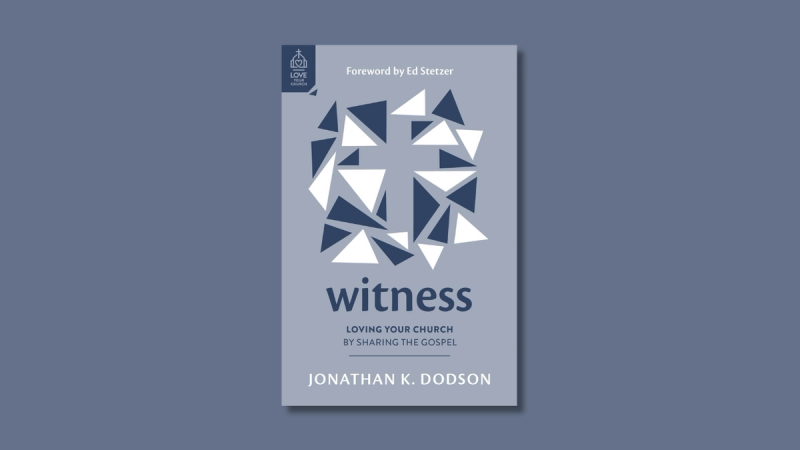
This excerpt is from chapter 5 of Witness by Jonathan Dodson, and is used with the permission of The Good Book Company.